Who Should Speak First in the Supreme Court?
This post was translated by AI from the original Norwegian. Read the original version
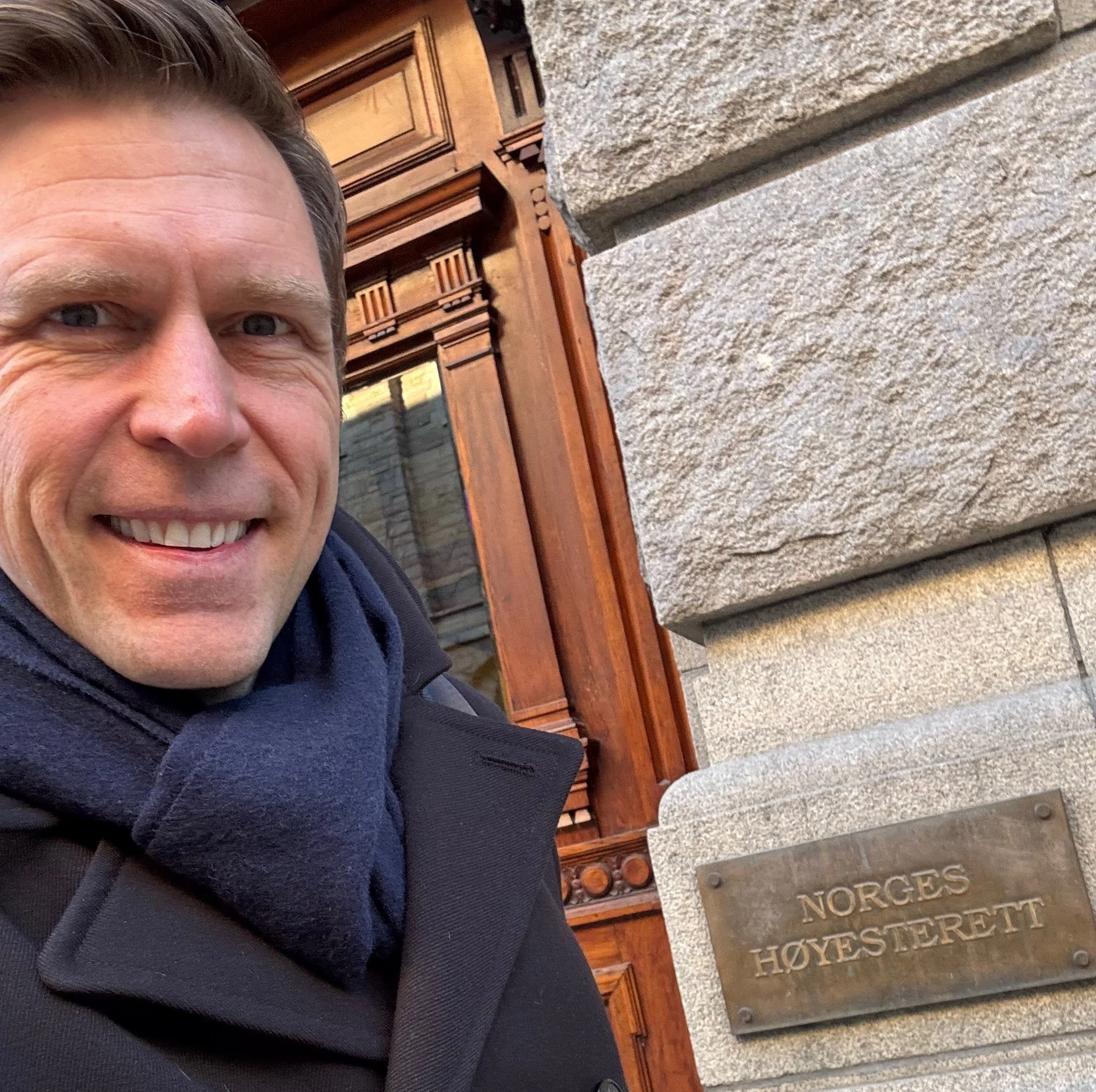
This post was written after a talk I gave to the Norwegian Supreme Court and was first published in Dagens Næringsliv on January 17, 2025.

Decision psychology is a field with a long and proud research tradition. Nobel Prizes have been awarded and concepts like groupthink, confirmation bias and nudging have become part of the vocabulary of everyone interested in leadership and decision-making.
Yet it is striking how little well-established knowledge is put to use when important decision-making processes are developed. For example, in the Norwegian Supreme Court.
Did you know that when the justices of the Norwegian Supreme Court are to present their views on a case during the so-called "deliberation", the presentation always starts with the most experienced justice and continues down the hierarchy, so that the round ends with the least experienced justice?
There is a high probability that you find this puzzling.
We conducted a survey and found that only 8% think this is a good way to do it. The clear majority believes the most sensible approach is for the least experienced to start (33%) or for the order to be random (55%).
Why do they start with the most experienced? The answer we received from the Supreme Court when we asked for the rationale was that the practice is "based on the premise that long experience provides assurance that the framework drawn up by the presiding justice forms a good basis for further discussion".
But is that true? Is it the case that the opinions of the person with the longest tenure "form a good basis for further discussion"? This is a question that decision psychology research can illuminate.
A famous experiment from the 1960s showed, for example, that simply telling people that others in a meeting have more experience than them leads them to conform more to those people. Since then, a long series of studies has shown that persons who are perceived to have authority have a problematically strong tendency to influence the outcome of a discussion. This phenomenon is called authority bias.
But those are ordinary people. Surely justices are strong enough to resist such mundane forces? To some extent they are. Research suggests that judges are better than the rest of us. That should really go without saying. The courts are designed for objectivity. What is surprising is how small the difference is between judges and ordinary people, and that we find signs of decision traps (so-called "bias") even in the highest courts.
In a large study of decisions in the highest courts of American states, for example, the researchers concluded that the length of judges' careers is closely linked to whether they end up in the minority or not. In other words, the results suggest that those with the most experience have the most to say about the outcome of cases.
We see signs of this in the Norwegian Supreme Court as well. The research database "Judicial Behavior in the Norwegian Supreme Court" provides a unique opportunity to look for patterns in the justices' decisions. In connection with one of the authors' recently completed master's thesis at the Faculty of Law in Oslo, we analyzed 9,825 votes cast from 2008 to 2023. It turns out that if you know what the most experienced justice thinks in a case, you know the outcome of the case with a full 96% certainty. Other analyses of the database have shown that the decisions are probably also influenced by both the justices' gender and political background.
None of these findings are surprising. Research shows us that the goal of equal treatment is a utopia. When humans make decisions, other factors will always creep in. The consequence is reduced critical thinking, and important arguments and perspectives are not brought forward. This can lead to innovative and efficiency-enhancing ideas being lost. The goal must be to limit the effect of these decision traps, and that goal can only be achieved if they are mapped.
Some of the most important decisions in society are made in the Norwegian Supreme Court and the rest of the public sector. Construction projects are approved, investments are made, diagnoses are made, grades are set, and social security rights are granted.
As citizens, we should be able to expect that these decision-making processes are grounded in existing knowledge and that regular analyses are conducted of the quality of decisions, the extent to which similar cases are treated similarly, and whether there are signs of bias. Norwegian shareholders should expect the same from decision-making processes in the companies they have invested in.
Basing important decisions and decision-making processes on one's own assumptions, traditions, and the opinions of authorities is, in any case, a poor solution. We find signs of the mentioned decision traps everywhere, so if you believe this is not a problem where you work, the burden of proof lies with you.
To quote physicist Carl Sagan: "Extraordinary claims require extraordinary evidence."